
What is Nail Biting?
Nail biting, also known as onychophagia, is a common yet often overlooked habit that affects millions of people worldwide. It’s more than just a nervous quirk—it’s an unconscious behaviour that can feel impossible to stop. For many, nail biting starts in childhood and continues into adulthood, becoming an automatic response to stress, boredom, or deep-seated emotions.
If you’ve ever found yourself biting your nails without even realizing it, you’re not alone. This habit can seem harmless, but over time, it can take a toll on your physical health, self-esteem, and confidence. The good news? You weren’t born a nail biter, which means you don’t have to stay one.
Why Do People Bite Their Nails?
Nail biting isn’t just about having something to do with your hands—it often runs deeper. It may be a subconscious attempt to soothe anxiety, cope with stress, or regain a sense of control. Many people who bite their nails describe feeling a momentary relief, only to be followed by frustration and regret when they see the damage they’ve done. There are some common triggers for nail biting.
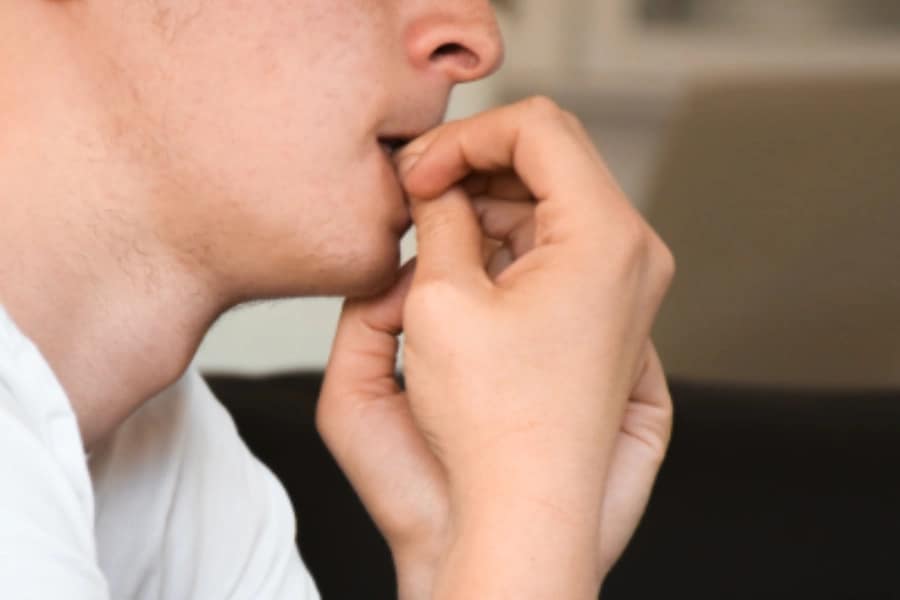
Stress & Anxiety
Nail biting is often an unconscious response to stress and anxiety, providing temporary relief but leading to frustration, embarrassment, and physical discomfort. This cycle continues as stress triggers the habit again, reinforcing the behaviour.
Overcoming nail biting requires addressing the habit and its underlying emotional triggers, replacing it with healthier coping strategies.

Boredom & Inactivity
Nail biting often occurs when hands are idle, making boredom a major trigger for the habit. Without something to keep the hands occupied, the subconscious mind seeks stimulation, and nail biting becomes an automatic response.
This mindless behaviour can happen while watching TV, sitting in traffic, or even during moments of deep thought. Because it’s done without much awareness, many people don’t realize they’re biting their nails until they see the damage.

Perfectionism & Frustration
For many, nail biting is driven by perfectionism and the urge to “fix” perceived imperfections. A rough edge, uneven nail, or tiny flaw can trigger the habit, leading to endless nibbling to make the nails look smooth or uniform. However, this often backfires, causing more damage and reinforcing frustration.
The more one tries to perfect their nails, the worse they become, creating a cycle of dissatisfaction.

Learned Behaviour
Nail biting is often a learned behaviour, picked up in childhood by observing parents, siblings, or peers. What starts as simple mimicry can quickly become second nature, ingrained over years of repetition.
Many people who bite their nails can’t recall when they started—it has always been a part of their routine. Because the habit develops so early, it can feel automatic and difficult to break.